Let Response To Nitrogen Ratings & Tissue Sample Results Guide In-Season Applications
May 28, 2020
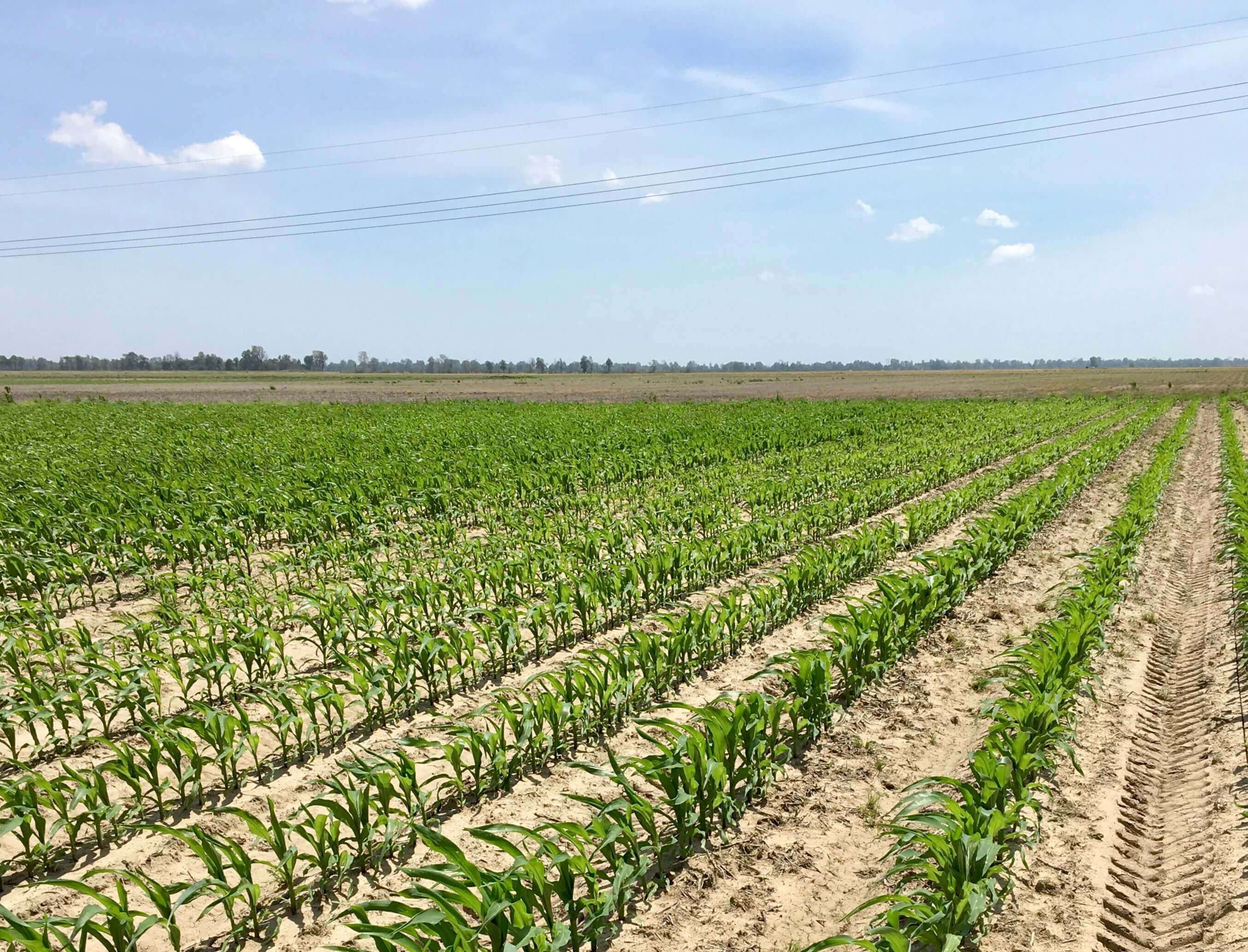
Every grower has their own style of managing nitrogen (N) , but since some hybrids respond better to N than others , it’s important to assess the data when deciding if and how much to apply in-season.
Last year , Answer Plot® research showed that planting hybrids with a high Response to Nitrogen (RTN) score and managing them with plenty of N added between 30.8 to 104.9 bu/A compared to planting the same hybrid under limited N conditions.* There are three CROPLAN® corn hybrids with high RTN ratings that are popular in and around the Mississippi Delta:
“If you planted any of these hybrids this year , they are the ones to target with in-season N or top-dress applications first ,” advises Curtis Fox , WinField® United Technical Seed Agronomist. “On the other hand , if you planted a hybrid with a low RTN score like CROPLAN CP5340VT2P or CP1717VT2P , there is little reason to apply any more than a baseline amount of N.”
In addition to considering a hybrid’s RTN ratings , Fox encourages having plant tissue samples evaluated by NutriSolutions® tissue analysis to further aid with crop fertility decisions.
“NutriSolutions® tissue analysis is a great resource for growers because the tool recommends optimal N rates and application timing , which can help minimize the financial and environmental costs of applying too much ,” he explains.
How & When to Apply N In-Season
Fox says while there are a number of different N application approaches that corn producers take in the Mississippi Delta , there are two practices that are the most popular. The first is to put down a good portion of N at planting , and then come back with a liquid applicator to apply the remaining N between V4 and V6.
“Typically you need to apply around 1.2 units of N for every bushel of corn. Growers who use liquid rigs , whether knife or the newer Y drop , will typically use a little more N up front or at preemergence and then follow up with the remainder of their desired unit with that liquid application ,” Fox explains. “So for example , you might apply 90 units of N upfront in the form of DAP , Ammonia Sulfate and urea mixtures , and then follow up with 45 to 50 gallons of 32%.”
“In this case , you’re planning to omit the ‘tassel shot ,’” he continues. “However , if growing conditions are optimal and a really good crop is projected , you might consider making that extra application to push yields. That’s where RTN scores and tissue sample analysis come in to play.”
Growers who don’t take the liquid application route rely on urea to supply the majority of their N , so they tend to use more of a “spoon-fed” approach.
“In this example , you might start with 40 to 60 units of N – usually in the form of DAP of Ammonia Sulfate – and then follow up with a side dress of urea ,” Fox says. “At this point , growers will look at things like corn size , weather and irrigation , just to name a few. The ‘tassel shot’ is always considered in this approach. This allows you to adjust based on the efficiency you feel you accomplished with the side dress , and it gives you time to see how the corn has responded. It’s still important to take advantage of RTN scores and tissue tests in this case.”
Further Improve Efficiencies with R7® Tool Technology
To further leverage RTN scores in your crop management system , Fox encourages producers to use the R7® Tool to help with variable rate N applications. Also take advantage of the Field Forecasting Tool , which analyzes in-season imagery to measure plant biomass and gauge the quality of the crop to help determine whether a supplemental N application will pay off in any given season.
For custom-tailored information about managing N levels on your CROPLAN corn hybrids this year , consult your local GreenPoint AG crop specialist. You can always count on them to help you manage your crop to its fullest potential and to help you get started with ag technology services.
And as far as 2020 RTN research trials are concerned , be sure to catch the data in action this summer at an Answer Plot® event near you!
* 2019 Answer Plot® national average yield difference non-limited and limited nitrogen applications; rates varied by soil type and location.
Last year , Answer Plot® research showed that planting hybrids with a high Response to Nitrogen (RTN) score and managing them with plenty of N added between 30.8 to 104.9 bu/A compared to planting the same hybrid under limited N conditions.* There are three CROPLAN® corn hybrids with high RTN ratings that are popular in and around the Mississippi Delta:
- CP5678VT2P
- CP1447VT2P
- CP5370SS/RIB
“If you planted any of these hybrids this year , they are the ones to target with in-season N or top-dress applications first ,” advises Curtis Fox , WinField® United Technical Seed Agronomist. “On the other hand , if you planted a hybrid with a low RTN score like CROPLAN CP5340VT2P or CP1717VT2P , there is little reason to apply any more than a baseline amount of N.”
In addition to considering a hybrid’s RTN ratings , Fox encourages having plant tissue samples evaluated by NutriSolutions® tissue analysis to further aid with crop fertility decisions.
“NutriSolutions® tissue analysis is a great resource for growers because the tool recommends optimal N rates and application timing , which can help minimize the financial and environmental costs of applying too much ,” he explains.
How & When to Apply N In-Season
Fox says while there are a number of different N application approaches that corn producers take in the Mississippi Delta , there are two practices that are the most popular. The first is to put down a good portion of N at planting , and then come back with a liquid applicator to apply the remaining N between V4 and V6.
“Typically you need to apply around 1.2 units of N for every bushel of corn. Growers who use liquid rigs , whether knife or the newer Y drop , will typically use a little more N up front or at preemergence and then follow up with the remainder of their desired unit with that liquid application ,” Fox explains. “So for example , you might apply 90 units of N upfront in the form of DAP , Ammonia Sulfate and urea mixtures , and then follow up with 45 to 50 gallons of 32%.”
“In this case , you’re planning to omit the ‘tassel shot ,’” he continues. “However , if growing conditions are optimal and a really good crop is projected , you might consider making that extra application to push yields. That’s where RTN scores and tissue sample analysis come in to play.”
Growers who don’t take the liquid application route rely on urea to supply the majority of their N , so they tend to use more of a “spoon-fed” approach.
“In this example , you might start with 40 to 60 units of N – usually in the form of DAP of Ammonia Sulfate – and then follow up with a side dress of urea ,” Fox says. “At this point , growers will look at things like corn size , weather and irrigation , just to name a few. The ‘tassel shot’ is always considered in this approach. This allows you to adjust based on the efficiency you feel you accomplished with the side dress , and it gives you time to see how the corn has responded. It’s still important to take advantage of RTN scores and tissue tests in this case.”
Further Improve Efficiencies with R7® Tool Technology
To further leverage RTN scores in your crop management system , Fox encourages producers to use the R7® Tool to help with variable rate N applications. Also take advantage of the Field Forecasting Tool , which analyzes in-season imagery to measure plant biomass and gauge the quality of the crop to help determine whether a supplemental N application will pay off in any given season.
For custom-tailored information about managing N levels on your CROPLAN corn hybrids this year , consult your local GreenPoint AG crop specialist. You can always count on them to help you manage your crop to its fullest potential and to help you get started with ag technology services.
And as far as 2020 RTN research trials are concerned , be sure to catch the data in action this summer at an Answer Plot® event near you!
* 2019 Answer Plot® national average yield difference non-limited and limited nitrogen applications; rates varied by soil type and location.