
In years past , doctors made house calls. Today , we’re encouraged to visit the doctor regularly , but what about our crops? They can’t drive themselves to the local doctor’s office and they sure can’t talk either.
While we know it’s impossible to take your crop to the doctor , ask your local Greenpoint AG representative to make a “house call” to your field for an in-season check up on your crop. Pulling tissue samples at key growth stages in a plant’s life is as good advice as the old adage: don’t judge a book by its cover. Here are some reasons why:
Evaluate Fertilizer Plans
Maybe you had GreenPoint AG pull soil samples this year and made a fertilizer plan. Pulling a tissue sample allows you to monitor the crop’s progress and is a surefire way to verify those fertilizer plans have you well on your way to hitting your crop yield targets. If not , time to make in-season adjustments.
See the Unseen
At some point in your life , you have probably believed in something you couldn’t see. A plant’s health status can be illusive to the naked eye through a phenomenon called ‘hidden hunger’ and the only way to “see” it is to take a tissue sample. By the time a plant is exhibiting visual deficiency symptoms , maximum yield potential has been reduced. Pulling a tissue sample is a proactive approach to identifying nutrients that are not being taken up by the plant. Sometimes this doesn’t line up with what a soil test is saying. The nutrient may not be plant-available , though it may show as adequate on a soil test. A common example of this occurs with potassium. A soil test may show high potassium , but the tissue test is showing deficient. Soil tests are limited to showing all soil potassium , and not only the available form.
Determine the Weak Link
Agronomists like to talk about Liebig’s Law of the Minimum when discussing fertility , and for good reason. Liebig’s law states that plant growth is determined by the most limited essential nutrient or the limiting factor , even if there is an abundance of all other nutrients. That means you can have all of the nitrogen in the world on a crop , but you’re missing out on maximizing yield if the other 12 essential nutrients aren’t also managed. It also means that you can’t save a crop through micronutrient applications or foliar macronutrient applications. You have to take care of your macronutrition first.
Identifying Plant Nutrition Trends
While nationwide nutrient deficiency trend reports are a great insight for understanding the big picture , it does not mean your farm is following the same trend. Once you’ve pulled enough samples , you may start identifying trends across your farm by management practice or soil type. This allows you to make adjustments to your management practices that are data-driven and localized down to the acre.
Timing is Important
Tissue sampling should not be a one and done approach. Just as splitting nitrogen applications can reduce risk of nitrogen loss due to in-season weather , pulling samples at key growth stages gives snapshots into yield-determining moments in the crop’s life. For example: ear girth in corn is determined around V5. Pulling a tissue sample at V5 can only show you a snapshot of what’s happening right then. This means you may miss deficiencies if a sample isn’t pulled from V8-VT when the length of the ear is being determined , and it takes both length and girth to maximize yields.
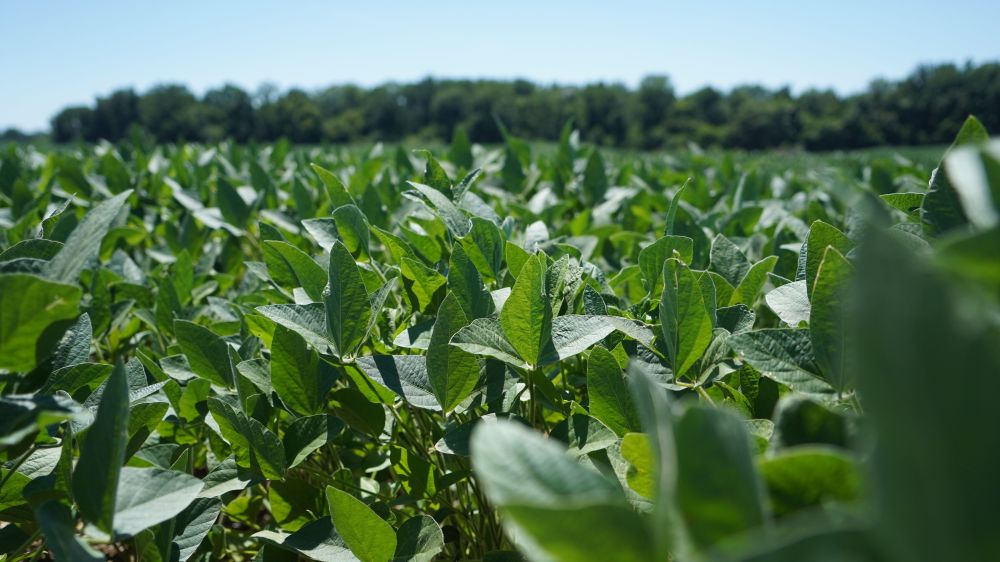
Agronomy
Have You Taken Your Crops To The Doctor?


Want help thinking through your acres?
Talk with a GreenPoint Ag agronomist who works in your region. Local knowledge, applied to your operation.