By Mark Johnson
More than 100 producers from across Alabama, Tennessee, and Georgia gathered April 3 for GreenPoint Ag’s first annual Forage Field Day, an event designed to give farmers a hands-on look at forage performance, management practices, and new agronomic tools.
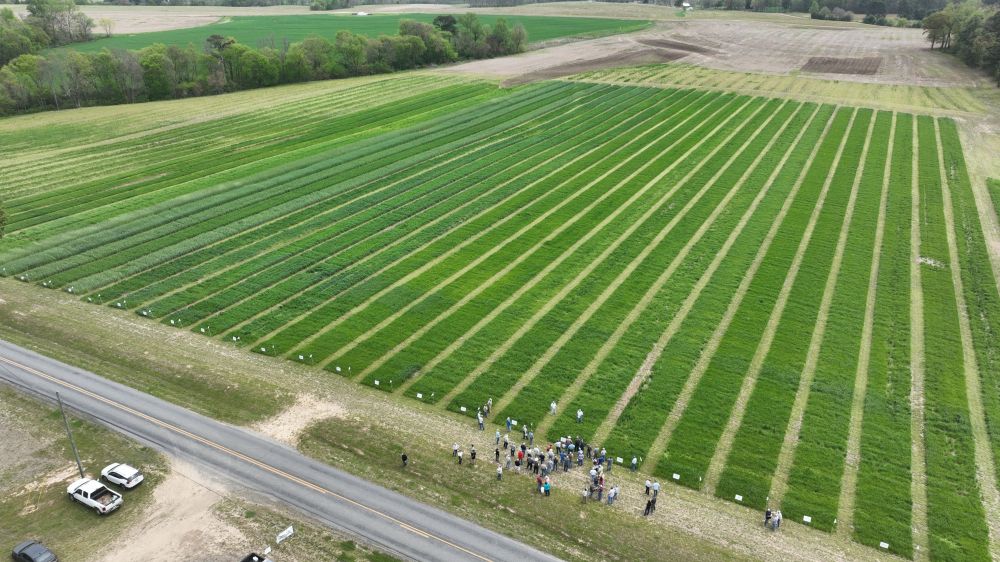
Held at Kellett Farms in near Crossville, Ala., the field day drew just over 100 attendees, comprising mostly rowcrop and beef producers, according to GreenPoint agronomist Zane Troxtel, who helped organize and lead the program. The event centered on large-scale demonstration plots showcasing a wide range of forage options and management strategies.
“We wanted to create something producers could actually see and walk through,” Troxtel said. “This is a very visual type of learning opportunity that you just can’t replicate without being in the field.”
The demonstration included 38 winter annual plots representing approximately 21 varieties and blends of ryegrass, along with small grains such as oats, cereal rye, barley, and triticale. Plots were established at three different planting dates, including a late-season planting on Feb. 5, to illustrate how timing impacts forage growth and usability.
Each plot was large enough — in some cases up to a half-acre — for producers to walk through and closely evaluate differences in stand establishment, maturity, and yield potential.
“We’re not just showing small test strips,” Troxtel said. “These plots are in 1/4 to 1/2 acre trials in order to pull as accurate data as we can to show the differences in the varieties..”
A key focus of the event was helping producers better understand how to extend grazing seasons and improve forage productivity through variety selection and blending. Troxtel and GreenPoint Ag Range and Pasture Specialist Perry Mobley led an in-depth, plot-by-plot discussion following lunch, highlighting differences between diploid and tetraploid ryegrass varieties, as well as the benefits of combining them.
“We showed individual diploids, tetraploids, and then blends of the two,” Troxtel explained. “You could clearly see the differences in growth and density, and that helps producers think about how to maximize forage production on fewer acres.”
In addition to ryegrass, the team walked attendees through varying maturities of oats, triticale, cereal rye, and barley, emphasizing how different species and varieties can be used strategically for early or late grazing, as well as balage.
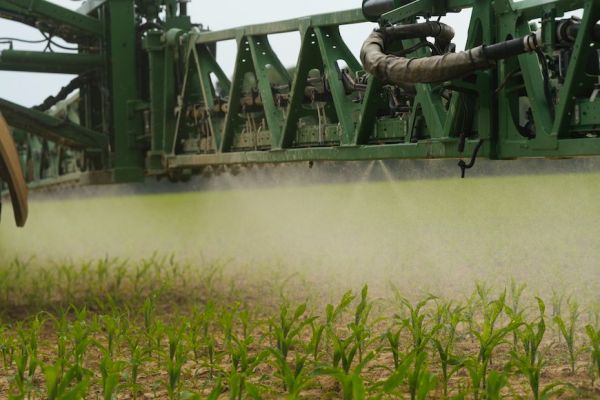
Beyond the forage plots, the field day also featured several educational presentations from GreenPoint Ag staff and industry partners. Agronomists Dylan Tyler of WinField United and Corey Vineyard with GreenPoint Ag, demonstrated the role of adjuvants in spray applications, including drift control and coverage. Using a visual spray board, they showed how different products affect spray patterns and performance.
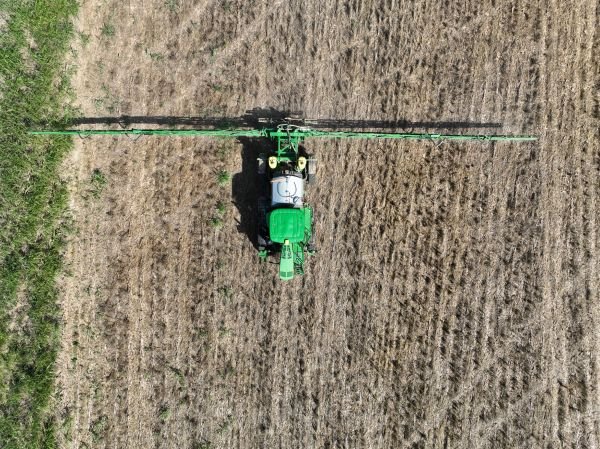
Brad Meyer, GreenPoint Ag agronomist, followed with demonstrations on burndown strategies for cover crops and a plant growth regulator trial using gibberellic acid. In that demonstration, alternating strips of treated and untreated forage made it easy for attendees to see differences in plant height and growth response.
“He ran a zigzag pattern across the plot, spraying one pass and not the next,” Troxtel said. “You could visibly see how the forage responded where the product was applied.”
GreenPoint Ag plans to collect additional data from the plots, including forage samples and yield measurements, to further quantify differences in quality and tonnage. That information will be shared at future events.

Despite operating under challenging weather conditions — including a rainfall deficit of approximately 12 inches compared to the 60-year average — the plots provided valuable insights into forage resilience and performance.
“The conditions we had this year really make the data even more meaningful,” Troxtel noted.
In addition to the educational components, the event also offered a strong sense of community. Members of the Geraldine and Crossville FFA chapters assisted with serving lunch, which featured ribeye steak sandwiches, Cajun shrimp, and traditional sides prepared by the GreenPoint Ag agronomy team and local partners.
The turnout and positive feedback have already prompted plans for future events.
“This is something we’re going to try to do every year,” Troxtel said. “We may move locations, but we’ll keep it around the same timeframe each spring and continue to expand what we’re showing.”
Looking ahead, GreenPoint Ag plans to incorporate additional forage blends and management demonstrations to help producers further refine their forage systems.
“Our goal is to give farmers practical information they can take home and use,” Troxtel said. “If they can see it here, it makes it a lot easier to apply it on their own operation.”