As harvest progresses, growers are beginning to think about variety selections for next season. Variety selection is a management decision that is critical to next season’s harvest. In all crops, yield potential is set when variety selection is made. Agronomic and pest management practices can maintain the genetic yield potential of a variety by minimizing limiting factors, but they cannot increase it. This places a premium on variety selection and on the way in which it is done. “Variety selection is not about identifying which lines did best over the past year – it is about predicting which lines will do best in the future,” says Jim Rouse, Director of Agriculture at Iowa State University, pointing out the pitfall of only looking at the top of last year’s variety test.
Yield is the result of the interaction between genetic potential and the environment. A variety should be chosen for a field because it has the genetic characteristics to perform well given the environment in that field. While yield is always the ultimate goal, selecting a variety from a trial based solely on yield without regard to the environmental conditions in which it grew may not result in a good performance in the future. Contrary to the claims of local meteorologists, predicting rainfall patterns and temperatures for the coming growing season is unattainable.
But, when attempting to predict growing conditions for the upcoming year, growers know a great deal about the environment in which their crops will develop. A grower knows soil characteristics, fertility levels, crop history, and the past incidence of pests and pathogens.
When choosing a variety, the first criteria should be availability. Management plans based on varieties in short supply usually end up including poorly adapted varieties added at the last minute. The second decision should be which, if any, GM traits are needed. The benefits of these traits are great if they eliminate a pest that is a limiting factor or fit into a weed control system already in place. The third criteria are the defensive traits needed to minimize limiting factors. These traits include disease resistance, insect resistance, nematode resistance, lodging and shattering potential, fallout in cotton, and tolerance to stress. While things such as disease resistance or fallout are not normally considered before yield potential, consider that a variety will not be able to reach its yield potential if overwhelmed by a limiting factor.
The last and most discussed criteria in variety selection is yield potential. Traditionally, the standard for proving a variety has been three years, but three years is now the life span of many varieties. With genetic advancements occurring in varieties and hybrids at an unprecedented pace, it is now necessary to evaluate and select varieties in a short period of time. So, how do we go about “predicting which lines will do well in the future” when faced with limited years to gather data? To choose a variety that will perform in an unknown environment:
- Look at performance data across as many environments as possible.
- Choose the variety that performs well in all of them.
- When faced with limited years, increase the number of locations looked at each year.
Many sources of information on yield performance are available from universities, extension agencies, seed companies, and growers — all of these need to be considered. Though data from trials with similar limiting factors to your own is beneficial, looking at locations with a different set of limiting factors is just as important because good performance in both shows stability in variety performance.
It is very important to know the source of information used, so you can be aware of the type of environment the trial was conducted and the data quality. This is easy with university and extension data; they usually publish agronomic and trial quality with the results. It can be more difficult with seed company data, but trials conducted on farm by seed companies can provide practical information and are important to consider. A good practice to ensure quality information is to visit trial locations during the growing season.
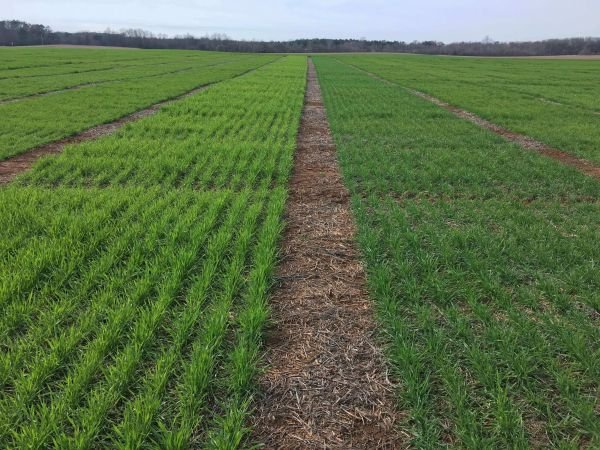
GreenPoint Ag has conducted variety trails on corn, cotton, soybeans, and wheat during the 2022 growing season in many parts of the state. Reach out to your local GreenPoint Ag for information on trials and yield results.
The following websites provide variety information:
ALABAMA
https://aaes.auburn.edu/blog/category/farming/crop-production/major-row-crops/cotton/
https://aaes.auburn.edu/blog/category/farming/crop-production/major-row-crops/corn/
https://aaes.auburn.edu/blog/category/farming/crop-production/major-row-crops/soybeans/
GEORGIA:
http://www.swvt.uga.edu/
TENNESSEE:
https://search.utcrops.com/
MISSISSIPPI:
http://extension.msstate.edu/agriculture/crops
KENTUCKY:
http://graincrops.ca.uky.edu/
ARKANSAS:
https://aaes.uada.edu/variety-testing/