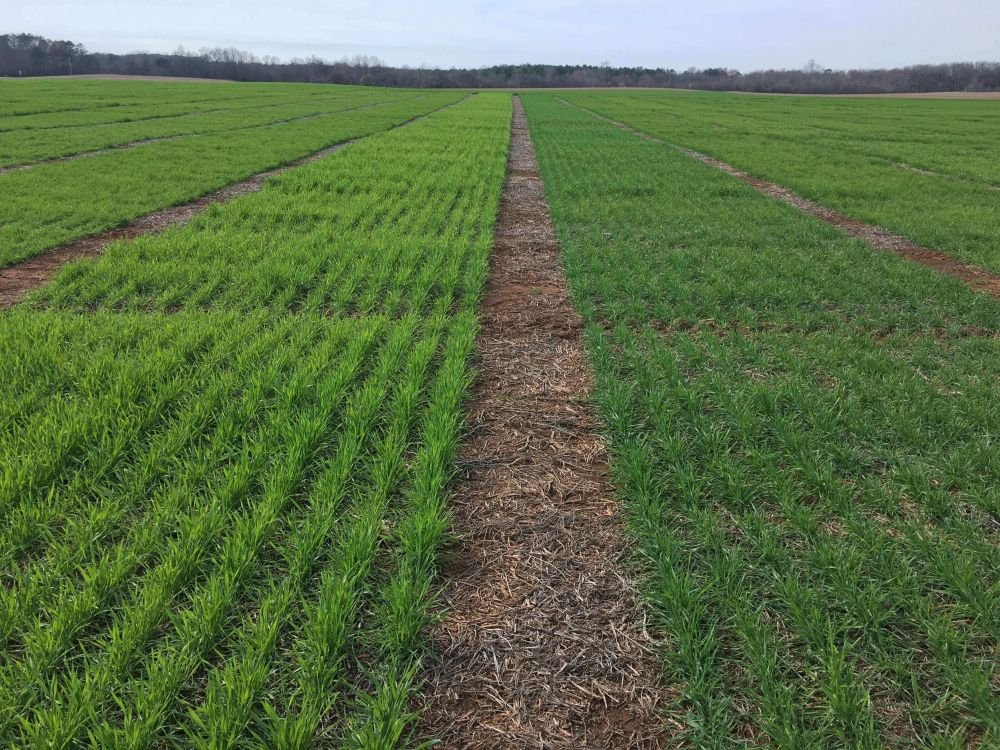
Tiller counts and efficient nitrogen management are the cornerstones of a high-yield wheat crop.
Wheat tillers are additional stems coming off from the main shoot of each wheat seed. Each tiller produces an additional seed head. The number of tillers you have is a good indicator of what kind of yields you can expect. It is recommended to have 80 to 100 tillers per square foot. For broadcast wheat , simply count the number of tillers in one square foot , and for drilled wheat , the distance measured will be determined by your row width. For a 7.5-inch drill , which is recommend for wheat grain production , the distance needed to count tillers is 19.2 inches.
Fall tillers are most important but assess tiller counts now to know whether to split your nitrogen and add tillers before jointing. When jointing — the term used when the growing point of the wheat comes above the soil line — occurs , no more additional tillers will be added , and the number of harvestable heads will be set.
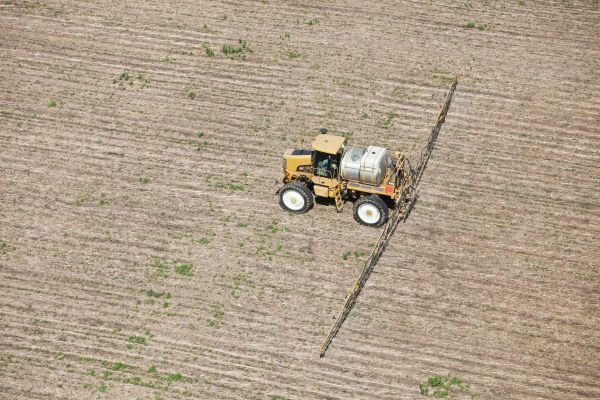
If the tiller counts are lacking , opt to split your nitrogen , increase your tiller counts , and yield potential. I have seen this split nitrogen shot save wheat crops and make outstanding yields where the grower was contemplating terminating instead. There is no need to go over 30 units of nitrogen with this split as it’s a small window that’s being addressed. There is usually some opportunity this time of year where the ground will hold up to a sprayer and hopefully farmers can take advantage of 40 or higher degree temperature days allowing the wheat to take up the nitrogen.
Any nitrogen source can be applied , but typically liquid is used for plant availability and uptake. Preferably 28-0-0-5 is the liquid nitrogen source used where sulfur is key and taken up and used in similar timings to nitrogen. Also , using liquid allows the option of the tank mixing some herbicides and controlling weeds at the same time by cutting the nitrogen solution half with water. Typically , 15-20 gallons per acre is applied , and if half of that volume is nitrogen (7.5-10 gallons) using 28-0- 0-5 comes out to 23-31 units of nitrogen.
If tiller counts are sufficient , you might opt to save that trip across the field or application cost and put out nitrogen in one shot around jointing. Splitting nitrogen is never a bad idea , but not always necessary with enough tillers. Split applications of nitrogen are a more efficient use of nitrogen , putting less out at one time versus one big shot where the risk of loss can be high , and running out of nitrogen during grain fill is a possibility. Also , splitting nitrogen can grant you a wider application window at jointing where it is critical to not be deficient because that is when the size of the wheat head will be determined.
If you are interested in crop management , nitrogen fertilization , or in determining your tiller counts for your wheat crop , contact the experts at your local GreenPoint Ag.