
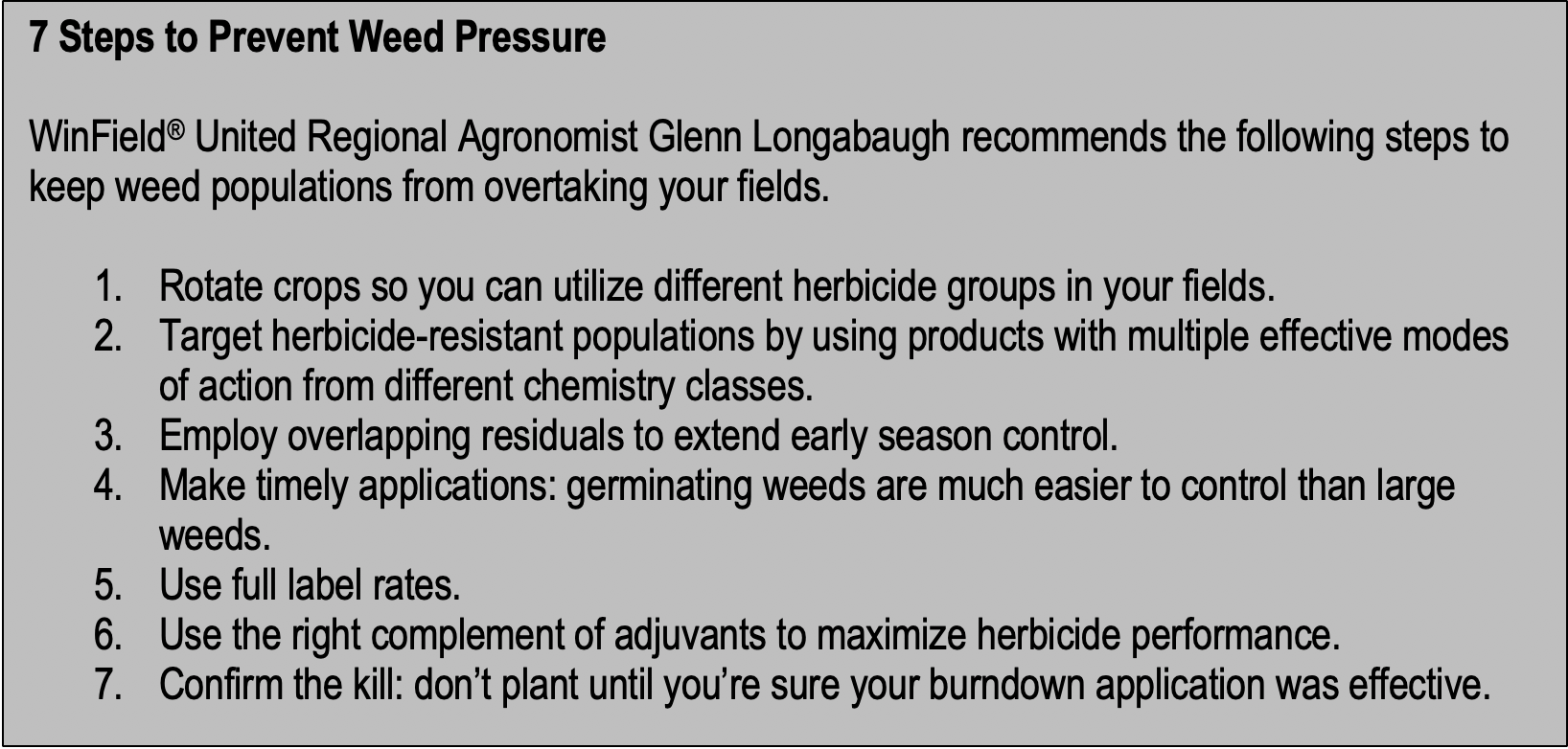
Every season , achieving effective weed control is one of the top objectives that soybean producers strive for. The key is to begin with a solid management strategy early on and continue to be diligent throughout the growing season so you can beat weeds to the punch.
Even the most noxious weeds can be controlled when they’re germinating because you only have to target a single growing point. But if wet field conditions or an ill-timed rainfall force you to delay your postemergent application , weeds could grow past the point where herbicides are effective , causing yield potential to suffer.
An Efficient Pre-Mix
Fortunately , soybean producers have a first-rate product in their toolbox that provides a much-needed cushion during the often-challenging early growing season. PREsidual® herbicide is a pre-mix of two active ingredients from two sites of action – metribuzin (group 5) and s-Metolachlor (group 15). In addition to helping you start off with a clean field , it provides more flexibility in your post-emergent herbicide application timing by delivering 3 to 4 weeks of residual control on difficult weeds.
“The residual control and dual modes of action that PREsidual herbicide provides makes it an ideal fit for early season weed control in soybeans , whether being planted into no-till or conventional-till fields ,” says Glenn Longabaugh , WinField® United Regional Agronomist. “It is effective against several hard-to-control , small-seeded broadleaf weeds like pigweeds , lambsquarters , and marestail , plus many annual grasses.”
Start Clean & Stay Clean
Soybean producers can choose from one of two application periods when applying PREsidual herbicide. They can either apply it as a preemergent application , or include it in their burndown tank mix. Let’s take a closer look at each of these options.
Preemerge: Many growers will find that they’ll get the most out of PREsidual herbicide by applying it after planting , but before soybean emergence. This will help achieve more consistent control of broadleaf and grass weeds than a single burndown application can provide. Plus , the residual control will extend the window for post-emergent herbicide applications to later in the season.
PREsidual is especially effective in controlling aggressive pigweed species like Palmer amaranth , which has a wider germination window , grow faster than other troublesome weeds and produce at least a quarter million seeds per plant.
“While many weeds will germinate by April or early May , pigweed species germinate during a window of 60 to 75 days ,” Longabaugh explains. “That means they can sprout into May and June , so having that residual protection sitting in your field , waiting to kill those weeds is a huge benefit.”
Early Pre-Plant: PREsidual herbicide also provides some activity on emerged weeds , making it a great complement to your burndown treatment. If you decide to go this route , Longabaugh recommends tank-mixing PREsidual with a glyphosate product like Cornerstone®5 Plus herbicide (group 9) and a 2 ,4-D product like a Shredder® brand herbicide or a dicamba product like Sterling Blue® herbicide (group 4). Then , return after planting to apply a different preemergent herbicide product , like Zidua® PRO , Prefix® , Warrant® Ultra or Anthem® to help keep your field clean until you make your postemergent application.
All Clear for Postemergent Application
Another advantage of the pre-mixed PREsidual herbicide formulation is the lack of any ALS , PPO or glyphosate chemistries , which allows growers to apply an ALS , PPO or glyphosate herbicide via a postemergent treatment without doubling up on sites of action.
“When making a postemergent application of whichever herbicide your soybean trait platform requires , I advise adding a group 15 , long-chain fatty acid inhibitor herbicide to your tank ,” Longabaugh concludes. “This should provide residual protection against pigweed species until the crop canopy closes.”
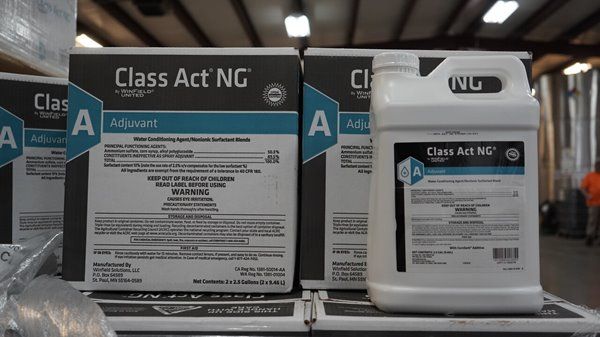
To maximize the performance of each weed control application , be sure to include the proper herbicide rates and adjuvant package in your tank. Since every field faces different challenges , we always encourage consulting your local GreenPoint AG sales representative for assistance. They’ll help you determine the right tank mix for your acres.

Agronomy
PREsidual® Herbicide Offers Overlapping Residual Control And Resistance Management In Soybeans



Want help thinking through your acres?
Talk with a GreenPoint Ag agronomist who works in your region. Local knowledge, applied to your operation.