If you’re the type of grower who intensively manages a winter wheat crop to optimize yields , there are a number of diseases to defend against throughout the course of the growing season. We recently sat down with Eric Kennedy , WinField® United Area Sales Manager for Tennessee , to learn about when these diseases can strike and how to prevent them from impacting your yield potential.
FALL
Barley Yellow Dwarf is the main disease to defend against in the fall. Aphids are the vectors of this virus , so Kennedy says the best way to prevent an infection is to utilize Resonate™ Seed Treatment , which helps keep populations to a minimum.
“Warm temperatures provide a favorable environment for aphids , so I recommend using a high labeled rate of insecticide when treating your seed , especially if you’re planting early in the fall ,” he explains. “The higher the rate , the longer window of protection you have.”
Of course , most growers have already seeded their winter wheat crop this fall. If you fall into that group and you didn’t use a seed treatment to control aphids , you might be able to benefit from a well-timed insecticide treatment.
“Tank-mixing a product like Grizzly® Too insecticide into your fall herbicide application can also be an effective way to control aphids populations ,” Kennedy notes. “It actually costs less per acre than using a seed treatment , but being able to make a fall application is never guaranteed. If it’s too wet and you’re unable to spray , you’ll leave your field unprotected. Having that peace-of-mind and protection from day one are two key reasons why seed treatments are considered to be the best option.”
SPRING
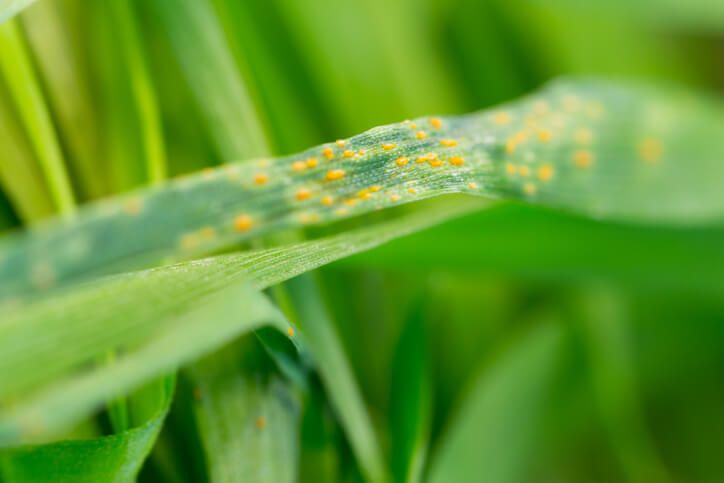
Leaf rust , stripe rust and powdery mildew are the most common fungal diseases to protect against in early spring , although glume blotch and loose smut can also occur during that timeframe. Therefore , Kennedy advises growers to include a product like RustEase® or Protegam™ YLD fungicide with their spring weed control application. He also recommends including an insecticide like Grizzly® Too in the tank mix for aphids and tying it all together with the right adjuvant package to increase plant uptake and improve depth of spray coverage.
“MasterLock® adjuvant is an important addition to any tank mix , because it helps improve spray deposition and canopy penetration , reduces spray drift and helps optimize droplet adhesion ,” he explains.
Take-all is another fungal disease that can impact wheat and other cereal crops early in the spring. Fungicides are ineffective against it , however , so it’s best controlled through cultural practices. The University of Kentucky Cooperative Extension Service* recommends applying nitrogen (N) , avoiding early fall seeding and rotating with corn or soybeans every 2 to 4 years to manage against the disease.
Fusarium head blight (scab) is generally the disease that can cause the most damage to your winter wheat crop , and fortunately it can be managed by applying one of the following fungicides at flowering in the spring.
“Caramba® , Prosario® 421 SC and Miravis® Ace fungicides are popular products that can provide effective protection against head scab ,” Kennedy says. “But , it’s always a good idea to consult your local GreenPoint Ag specialist for help in selecting the fungicide best suited for your situation.”
“The key is to spray for head scab during early flowering (Feekes 10.5.1–10.5.2) – when the anther emerges from the head – so you can protect your crop before an infection is most likely to occur ,” he concludes.
Many growers who manage their crop to push yields plan to apply a fungicide during flowering , regardless if head scab is present. But if you prefer to take a “wait and see” approach , the University of Tennessee Institute of Agriculture** recommends spraying if one or more of these conditions are present:
· Disease is already present or likely to occur.
· N has been applied and the crop has good yield potential.
· Warm and humid conditions are expected.
· Wheat has been planted in the field in the past 2 years or behind corn.
If you need assistance in determining the right crop protection treatments for your winter wheat acres , consult your local GreenPoint Ag specialist. You can always trust them to provide the right guidance for your bottom line.
* https://plantpathology.ca.uky.edu/files/ppfs-ag-sg-01.pdf
** https://extension.tennessee.edu/publications/Documents/W663.pdf
Agronomy
Diseases To Be Wary Of In Winter Wheat


Want help thinking through your acres?
Talk with a GreenPoint Ag agronomist who works in your region. Local knowledge, applied to your operation.