Not all weeds are created equal , and not all weed control strategies should be the same either.
As we head into spring planting , it’s important to target winter annuals to provide a clean start for crops.
Broadleaves such as ragweed and early germinated Palmer , and grasses such as poa annua and rye grass are likely to be our primary targets. Do a little scouting to determine what’s growing and use your historical knowledge of the land to consider additional early germinating weeds in your plan.
Setting Up for the Kill – Points to Consider
After you’ve done an assessment of this year’s weed pressure , it’s time to prepare for battle. Once again , a little preparation goes a long way in ensuring a successful application and positive results in the field.
Weather
Watch the forecast and , ideally , when the five-day outlook is favorable , do what you can to get in the field and begin your application. You’ll be targeting hardy weeds in a cool environment , both of which tend to slow the action of your herbicide. Be patient after your application , as it can take two weeks or longer to see die down. You should also consider wind speed to control drift that can reduce coverage and damage vegetation in neighboring areas.
Equipment
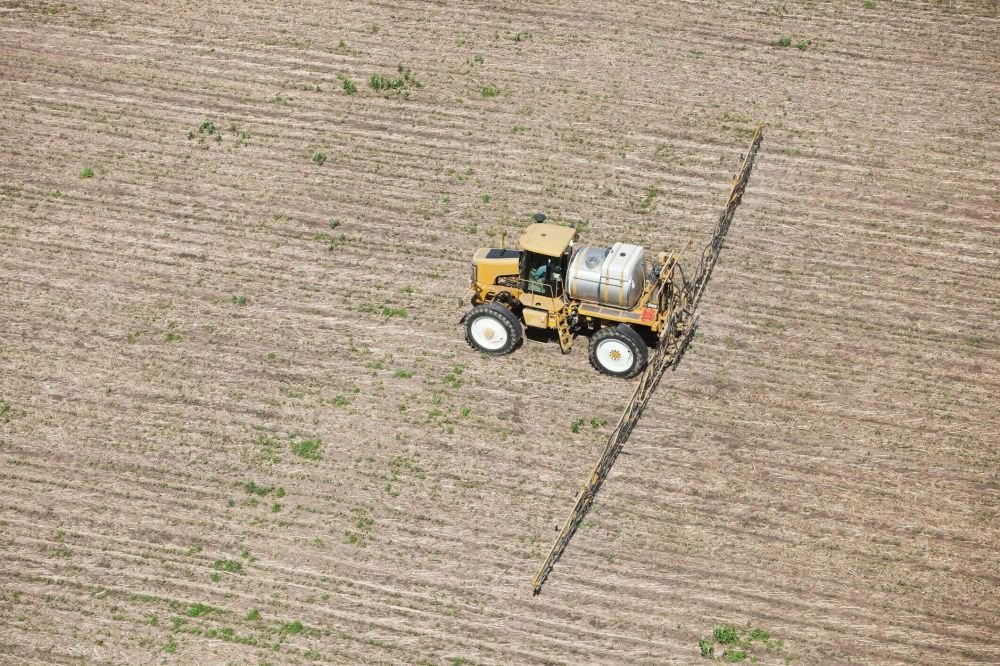
Once you roll into the field , it’s critical that you’re confident of your equipment’s ability to do the job. Take time to perform routine maintenance ahead of time so herbicides have the best chance to completely cover and control targeted weeds.
Check sprayer tips to make sure they are functioning properly and that you have the right tip for the job. Flat fans or cone patterns provide the best coverage this time of year. Clean all tips and be sure the spray pattern is consistent to prevent misses in the field. If you’re unsure about the status of a sprayer tip , it’s better to replace it rather than risk poor performance.
Spray Solution
Once you’ve identified targeted weeds , it’s time to consider your weapons. There are a number of tried and true herbicides that will do the trick , but also take outside factors into account to enhance the performance of your spray solution. For example , it’s likely that your mix water will be cold this time of year. If you have black storage tanks , fill them ahead of time to allow the sun to warm the water. This helps with product dispersion and mixability.
If you’re tank mixing herbicides to be more efficient with your spraying time , understand that combining chemicals may affect the efficacy of the products. For example , combining 2 ,4-D and glyphosate will not affect the physical sprayability , but efficacy may be compromised. In this situation , you should consult your local GreenPoint AG representative to discuss using the upper range of a labeled rate to overcome any antagonistic effects that may occur.
Another example is when Section®Three (clethodim) and glyphosate are mixed. Clethodim requires an oil-based surfactant to perform its best , while glyphosate doesn’t perform as well when mixed with an oil. As a result , it may take a higher rate of glyphosate to control grass if you’re tank mixing with Section Three.
As 2019 demonstrated , spring weather patterns are unpredictable and application windows can get awfully short. Plan for the worst and odds are that you’ll come out better than expected.
Manage Your Risk
Be sure you have considered plant-back dates in case you aren’t able to plant the crop you are originally intending. It’s important to know how long the herbicide active ingredient will remain active in the soil and how it can affect your ability to switch crops as needed.
Finally , bring in hired help when needed to manage compressed timelines. GreenPoint AG is your partner for custom application services , and our equipment utilizes the latest technology to address the specific needs of your fields.
Section is a registered trademark of Winfield Solutions , LLC