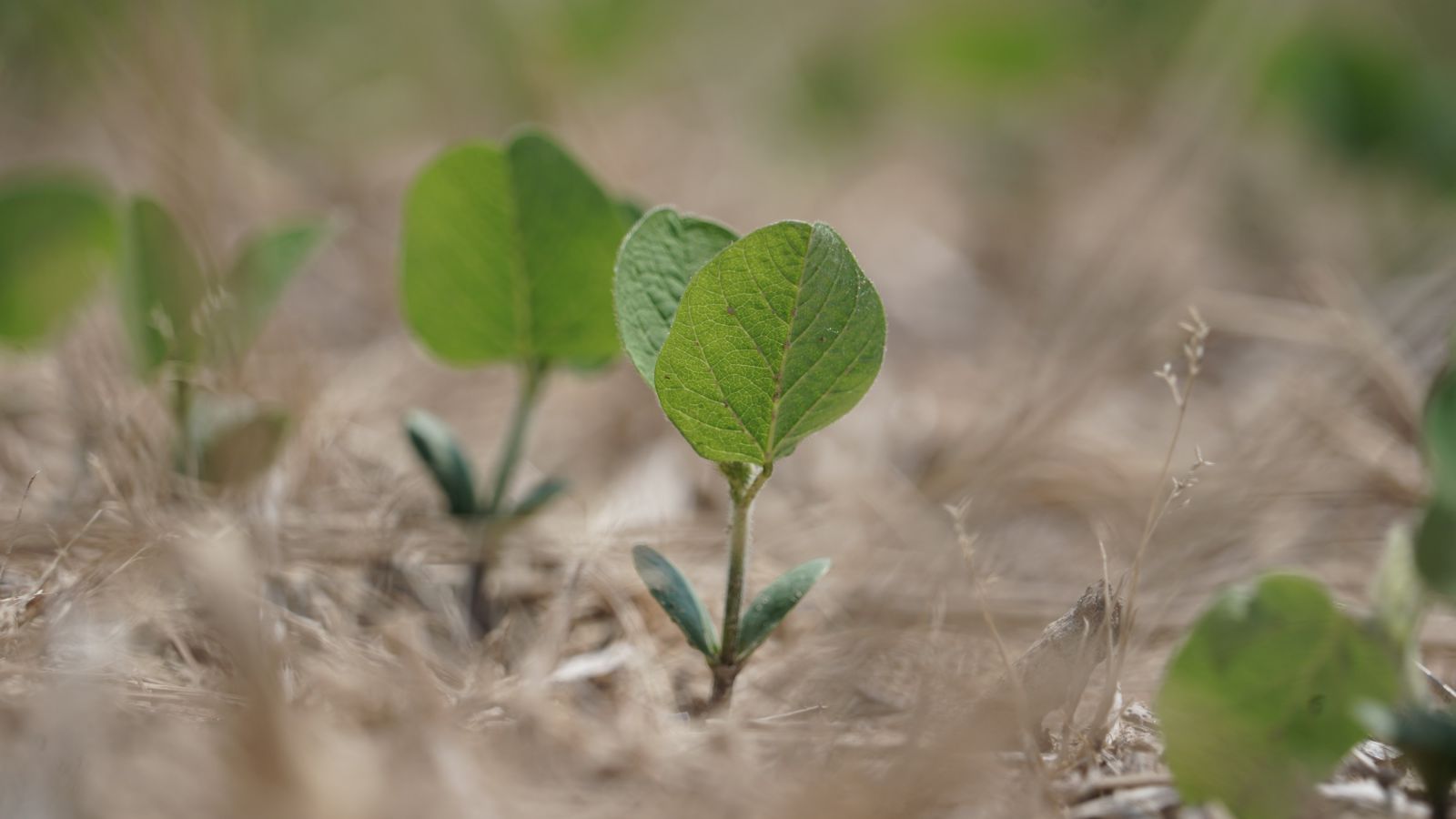
As soybean producers in the West Tennessee region enter the R3 and R4 reproductive growth stages this month, they will likely be battling two of the most stubborn insects in their lineup of pests: brown and green stink bugs.
The brown stink bug (Euschistus servus) is a non-native, invasive species recognizable by its shield-shaped body, brownish coloration, and the presence of a lighter band on its antennae. The green stink bug (Nezara viridula), as its name suggests, has a bright green, shield-shaped body and can often be spotted by the distinctive triangular-shaped plate on its back.
Both types of stink bugs feed on soybean plants by inserting their needle-like mouthparts into the pods, stems, and seeds. This feeding method results in direct damage to the plant tissues and can introduce pathogens, fungi, and other negative elements leading to further plant stress and yield reduction.
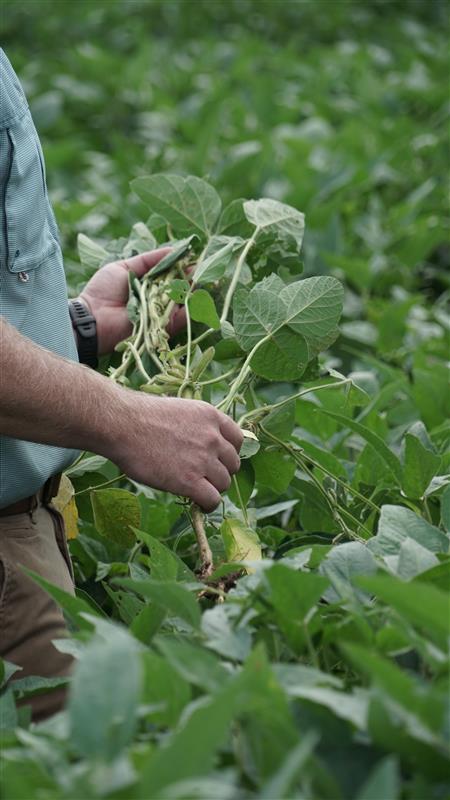
GreenPoint Ag agronomist Curtis Fox says the first step to dealing with stink bugs is proper scouting during the first few weeks of the R2 reproductive stage.
“Typically, I check random spots that best represent that particular field,” Fox says. “If it’s a small field, I may just sweep a couple of times in consecutive order from where I start, check [my net], and then continue walking in the same line and check again. If it’s a big field, I might check opposite ends and do the same thing. That way, you’re assuring a good representative sample of the field.”
The University of Tennessee Institute of Agriculture recommends using an economic threshold — the stink bug population level at which the potential loss from insect damage equals the cost of controlling the pest — of nine bugs per 25 sweeps or one bug per foot of row from the R1 to R6 growth stages. From R6 to R7, treat when an average of 18 or more stink bugs is found per 25 sweeps.
Fox says that although economic thresholds are determined using a wide variety of scientific criteria, acting on the information is often “more about using good common sense.”
“I wouldn’t want to suggest that I cover every acre when I’m walking a field,” he points out, noting that when scouting, he looks for both the bugs themselves and crop tissue damage. “If I sweep one end and come away well above the threshold, I’m going to recommend killing bugs, no questions asked. That’s a pretty good indication that the rest of the field is either infested or soon will be.”
Other times, he says, scouting a field over several weeks might reveal that while stink bugs are below the threshold, they are consistently approaching that number, making the decision whether to spray a little more difficult for the grower.
“It’s not always cut and dried,” Fox admits. “Even though nine is the magic number, the grower must ask himself, ‘Do I want to let this six or seven continue to eat or just go ahead and make the decision to control them right now?’ I know growers who will move forward with treatment at five, while others will be at seven and decide to hold off. Neither is necessarily wrong.”
However, once the number exceeds the threshold, treatment tends to be a foregone conclusion, Fox says. It is generally agreed that when the pest population exceeds this threshold, taking action becomes cost-effective because the potential yield loss or quality reduction would be greater than the cost of the control measures.
Some studies have shown that when a stink bug “bites” or stings a pod and damages the seed within, the plant will compensate by directing more energy into its other, undamaged pods and produce a heavier bean, thus compensating for the bug damage.
“This can be another monkey wrench in the process of determining the proper threshold,” Fox says. “However, even in that case, the plant can sustain further damage when rain and moisture is allowed to penetrate the bitten pods through the holes left by the bugs. This is another reason I tend to lean toward treatment even when number is slightly below the threshold.”
Fox says that although the proper insecticide will usually be effective for both stink bug varieties, some types might be better depending on the particular bug.
“Winfield United’s Grizzly Too®, which uses lambda-cyhalothrin, a group 3A pyrethroid, as the active ingredient, works well on the green variety,” he says. “Browns, however, have developed resistance to pyrethroid and are a bit tougher to control. For those, I recommend Tundra®, which uses bifenthrin as its active ingredient. If you have a complex of browns and greens in one field, I’d stick with Tundra®.”
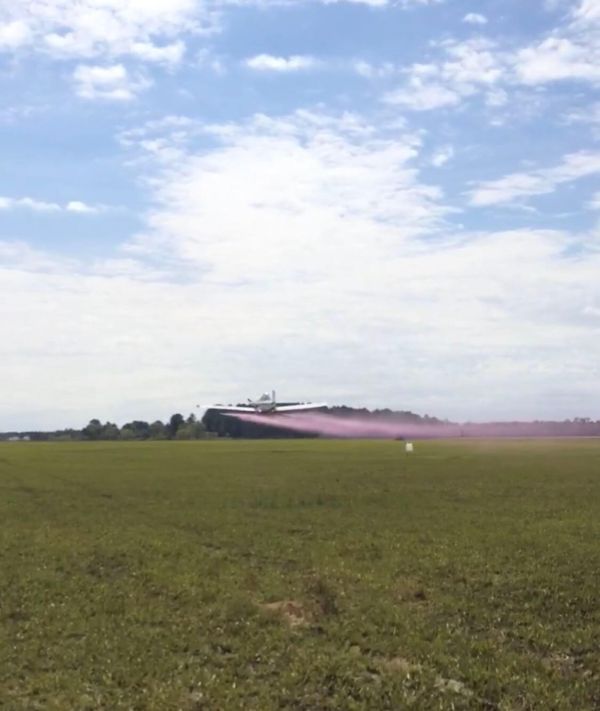
He also recommends using a high-quality adjuvant like Masterlock® to achieve good coverage and canopy penetration when spraying for stink bugs.
Written by Mark Johnson
Agronomy
The Magic Number


Want help thinking through your acres?
Talk with a GreenPoint Ag agronomist who works in your region. Local knowledge, applied to your operation.