
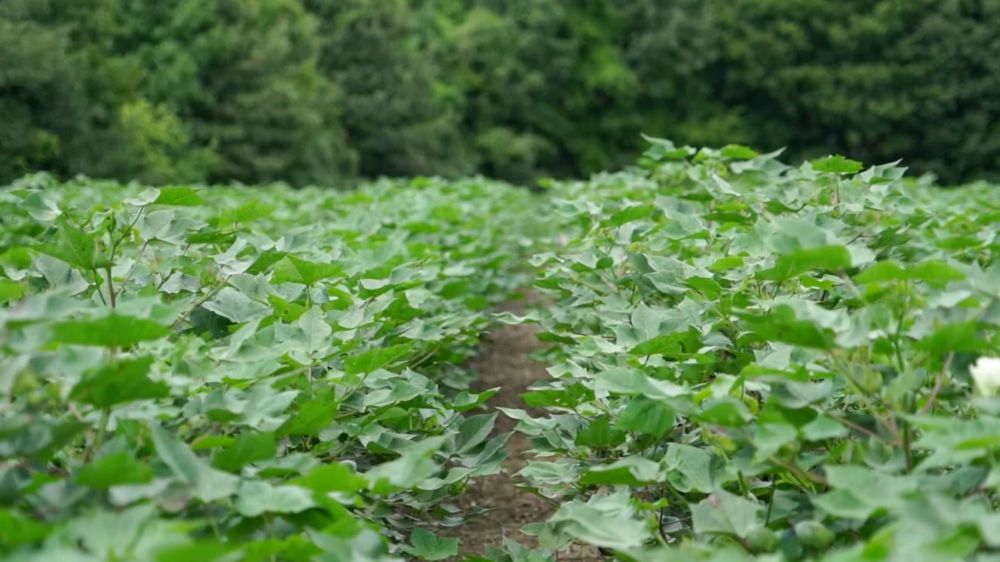
The University of Tennessee recently published their emerging research that sheds light on the growing problem of acephate resistance in tobacco thrips in West TN. The study investigated thrips populations in cotton fields and found that certain populations displayed varying levels of resistance to acephate, one of the key pesticides currently used to combat thrips infestations.
Thrips are small, slender insects that feed on plant tissues by puncturing and sucking out cell contents of foliage. Thrips feeding can result in stunted growth, distortion of leaves, and even death of young cotton plants as well as transmit diseases. The severity of thrips can vary year to year, depending on many factors, including weather conditions, crop management practices, and the effectiveness of pest control measures. Data from the USDA estimates that management and yield loss results in $70.7 million dollars for cotton growers, which is why acephate resistance has become such a pressing concern in cotton production.
Several factors contribute to the development and spread of acephate-resistance thrips in cotton. The University of Tennessee identified high selection pressure resulting from the frequent and continuous use of acephate as the primary driver of resistance. The reliance on a single mode of action increases the selection pressure on thrips populations, accelerating the development of resistance. Additionally, the reproductive capabilities and short generation time of thrips enable rapid adaptation to environmental changes, including exposure to insecticides.
As resistance spreads, the effectiveness of acephate decreases, leading to reduced control of thrips populations and economic losses for farmers. To address this issue, integrated pest management (IPM) should be implemented. IPM involves a combination of various strategies, including cultural practices, biological control agents, and targeted use of insecticides with different modes of action.
Utilizing a product such as Intrepid Edge that contains a different mode of action (Group 5) can help to minimize resistance development. Intrepid Edge, containing the active ingredient, spinetoram, delivers high levels of control for thrips in cotton at low use rates. Not many insecticides require a surfactant, but spinetoram is an active that has shown an increase in efficacy with a high-quality surfactant. Pairing Intrepid Edge with MasterLock® adjuvant will maximize performance as well by creating uniform droplet sizes and getting more active ingredient to stick to the leaf surface. Since spinetoram has translaminar activity, getting more active ingredient stuck to the leaf surface will optimize control.
Contact your local GreenPoint Ag advisor today for more information on managing acephate-resistance thrips in cotton.
Agronomy
New Research Shows Acephate-Resistant Thrips in Cotton



Want help thinking through your acres?
Talk with a GreenPoint Ag agronomist who works in your region. Local knowledge, applied to your operation.